 Image 1 of 3
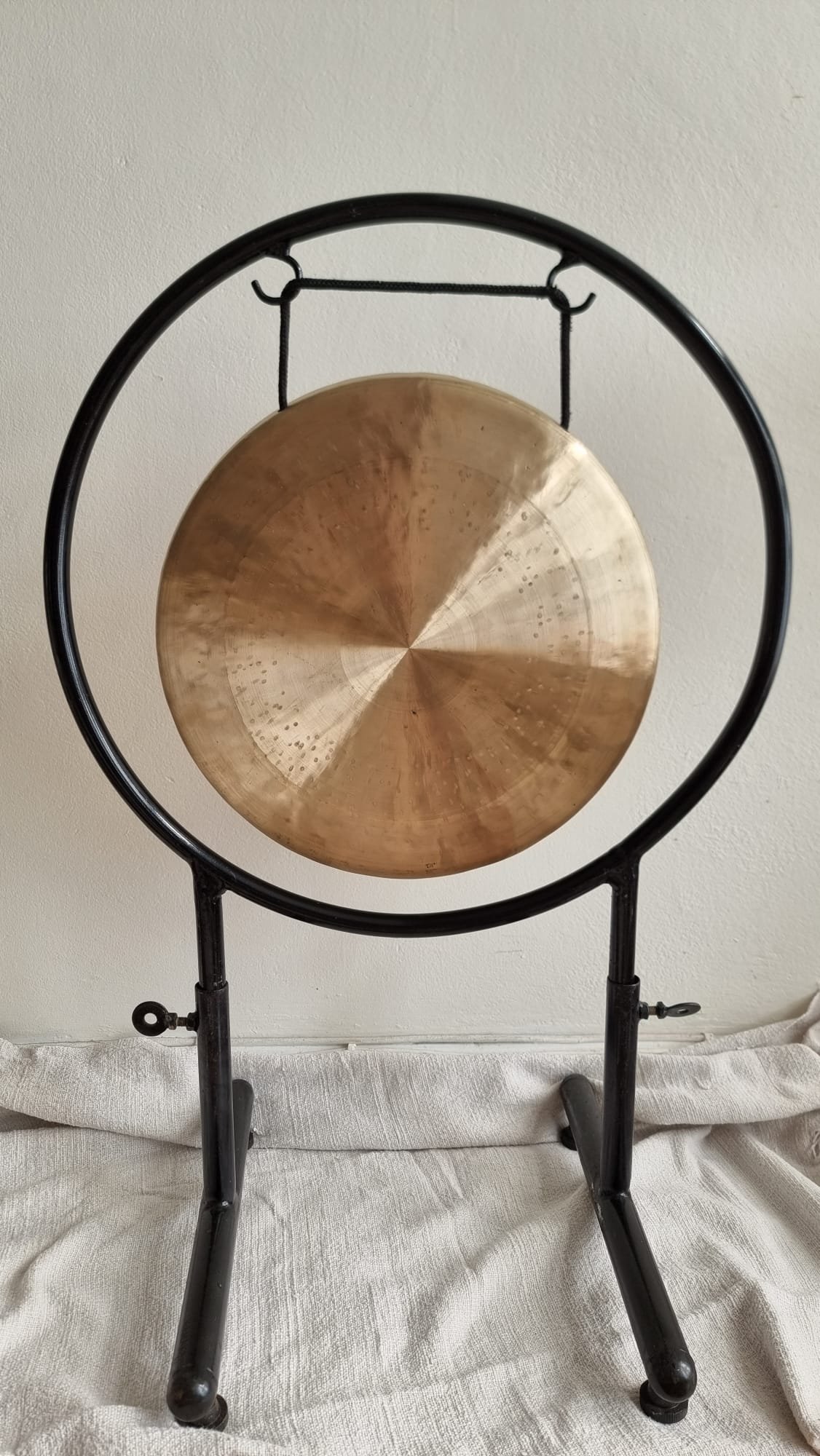 Image 2 of 3
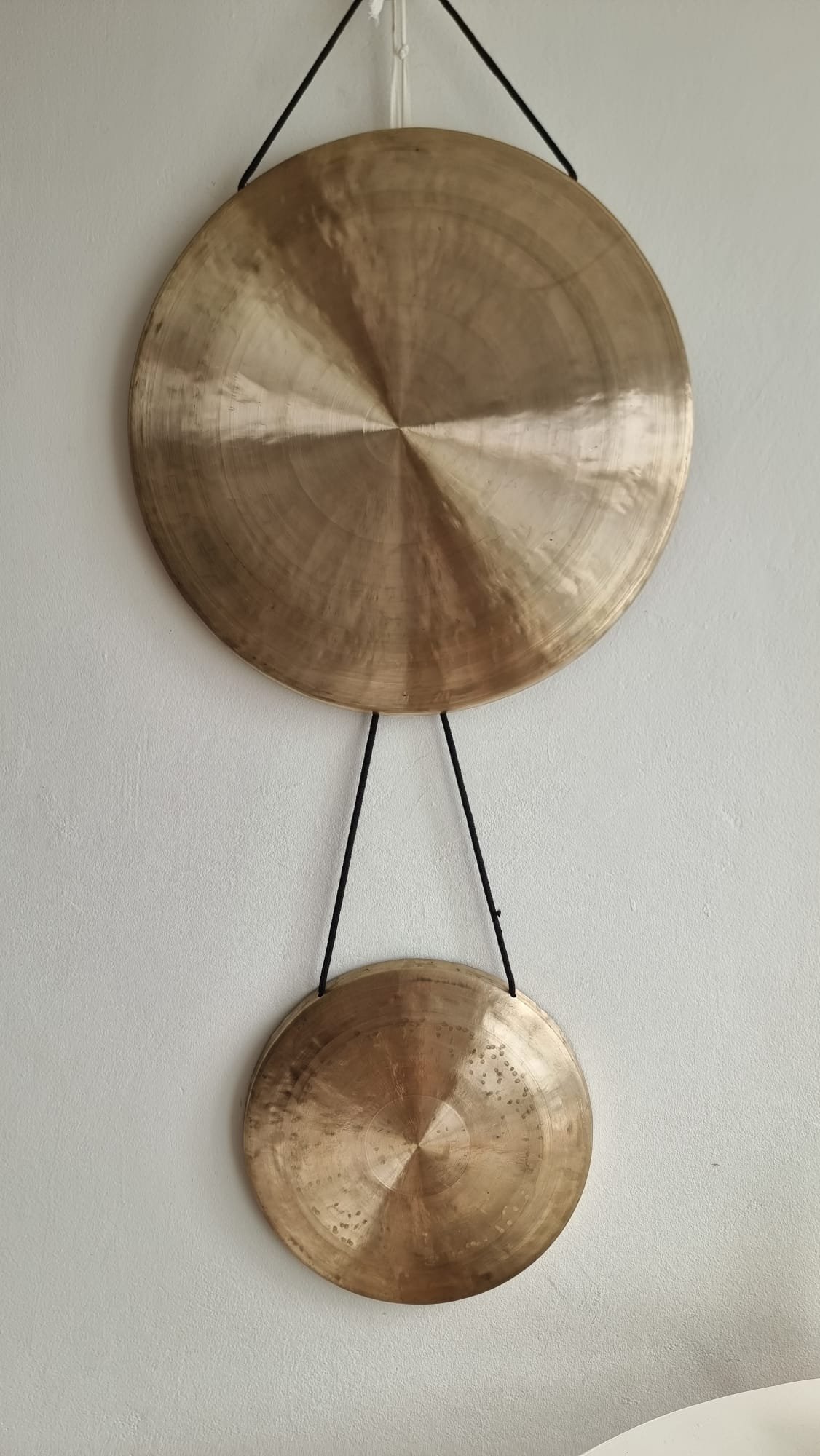 Image 3 of 3
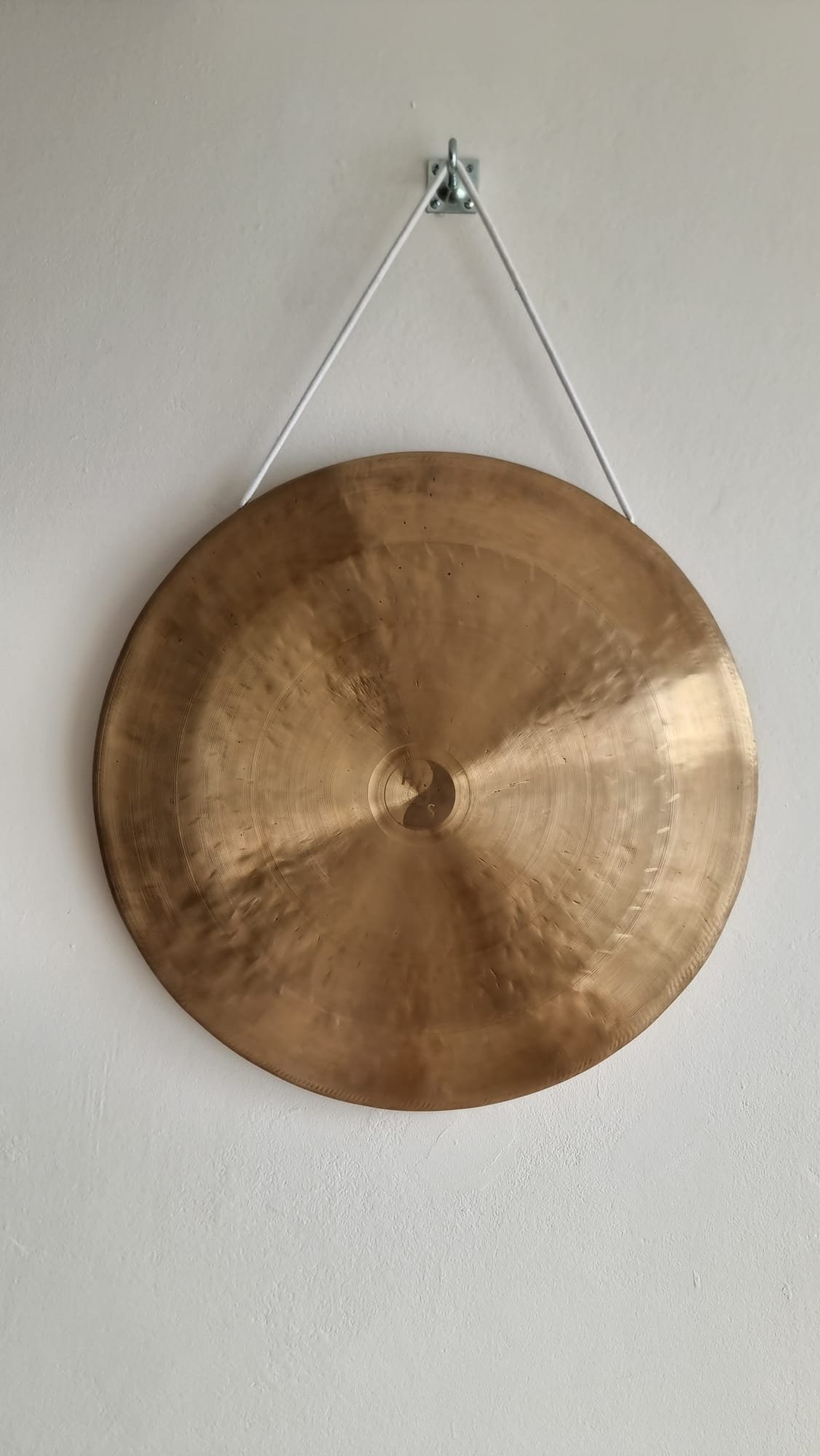
Even though it boasts similarities to the gong, one should not confuse both instruments since their construction and sound have a range of important variations. The tam-tam is a relatively flat disk, and unlike the gong, it has no center knob. It has no definite pitch, although the relative pitch of different-sized tam-tams does vary.
The word "tam-tam" originated from the Malaysian term "tammittam," which is an onomatopoeic term for the drum. In the 7th century B.C., musical metal disks emerged in China. Since these ancient times, gamelan orchestras were established in which whole groups of these discs, such as tam-tams and gongs, played a crucial part.
The tam-tam is made of either hammered sheet bronze or cast bronze and has two holes in the rim from which twine or wire crosses can be suspended.
The tam-tam can be rubbed with a silicone mallet called a flume which is used to create sounds on a gong by friction. Also known as a friction mallet, they are designed to be dragged across the gong's surface to produce ethereal drones and deep bass notes, distinct from traditional mallets used for striking.
The instrument is not struck precisely in the middle but around a hand's width from the center, as it is here that the highest volume and the lowest notes are generated. Nevertheless, the ideal spot differs between instruments, one must find it by trial and error. Even a few centimeters away from it will dramatically alter the relative pitch. The tam-tam vibrates the most towards the center and the least towards the edges, like the gong. It's for this reason that the turned-up rim can suspend it.
The sound of this instrument comprises a significant amount of inharmonic partials. Notes take longer to develop fully on larger tam-tams, and the overall pitch is lower. It's also harder to damp a large tam-tam.
This wide range of tonal possibilities means that the tam-tam is used in loud and soft passages. It often complements an existing orchestra sound but can also create a particular mood, such as slow, soft strokes representing the human heartbeat.
View video of 40cm Tam Tam Gong here: https://youtube.com/shorts/JrItiOtucpA
Even though it boasts similarities to the gong, one should not confuse both instruments since their construction and sound have a range of important variations. The tam-tam is a relatively flat disk, and unlike the gong, it has no center knob. It has no definite pitch, although the relative pitch of different-sized tam-tams does vary.
The word "tam-tam" originated from the Malaysian term "tammittam," which is an onomatopoeic term for the drum. In the 7th century B.C., musical metal disks emerged in China. Since these ancient times, gamelan orchestras were established in which whole groups of these discs, such as tam-tams and gongs, played a crucial part.
The tam-tam is made of either hammered sheet bronze or cast bronze and has two holes in the rim from which twine or wire crosses can be suspended.
The tam-tam can be rubbed with a silicone mallet called a flume which is used to create sounds on a gong by friction. Also known as a friction mallet, they are designed to be dragged across the gong's surface to produce ethereal drones and deep bass notes, distinct from traditional mallets used for striking.
The instrument is not struck precisely in the middle but around a hand's width from the center, as it is here that the highest volume and the lowest notes are generated. Nevertheless, the ideal spot differs between instruments, one must find it by trial and error. Even a few centimeters away from it will dramatically alter the relative pitch. The tam-tam vibrates the most towards the center and the least towards the edges, like the gong. It's for this reason that the turned-up rim can suspend it.
The sound of this instrument comprises a significant amount of inharmonic partials. Notes take longer to develop fully on larger tam-tams, and the overall pitch is lower. It's also harder to damp a large tam-tam.
This wide range of tonal possibilities means that the tam-tam is used in loud and soft passages. It often complements an existing orchestra sound but can also create a particular mood, such as slow, soft strokes representing the human heartbeat.
View video of 40cm Tam Tam Gong here: https://youtube.com/shorts/JrItiOtucpA